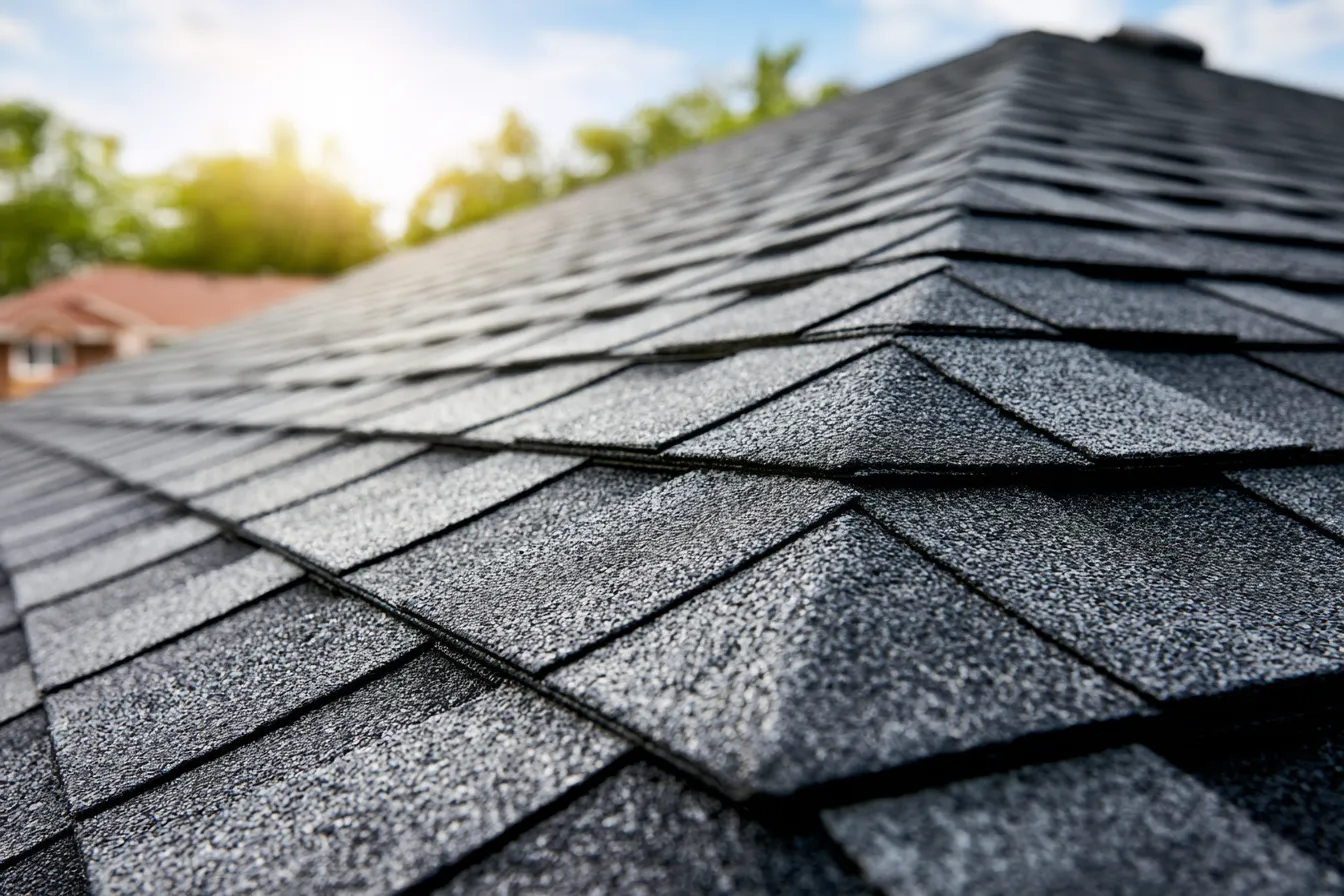
Drive any Carrollton street and you are looking at a shingle catalog: flat 3-tab survivors from the 1990s, the architectural fields that replaced most of them, a scattering of sculpted designer roofs on the larger homes. What you cannot see from the car is the spec that matters most here. This guide sorts the visible tiers from the invisible rating, with the local weather doing the arguing.
The three tiers you can see from the street
3-tab is the entry tier: one flat layer, one repeating shape, the lightest build and the lowest wind rating. It ruled this town in the 1980s and it is why so many older fields failed the way they did; almost nobody installs it on a full roof here anymore.
Architectural is the default now, two bonded layers with a staggered shadow line, typically rated for 110 to 130 mph winds when nailed to spec. Designer sits above it: heavier, sculpted to read like slate or shake, priced accordingly. The honest summary is that tier buys build quality and looks, and stops there.
The rating you cannot see, and why it runs this county
Impact resistance is a separate axis entirely. UL 2218 rates shingles by dropping steel balls on them and inspecting the mat for fractures; Class 4 is the top score. It is not a tier: architectural and designer lines both come in Class 4 versions, usually a step up in price within the same family.
The argument for it is the county record: 96 hail reports in four years. A Class 4 mat takes the common strike sizes measurably better than a standard one, and some carriers discount premiums for it, which quietly changes the math. Ask your insurer before you decide; the answer varies by policy and it is worth having in writing.
What Texas heat does to the decision
Heat is the other local variable, and it works from below. An unventilated Carrollton attic bakes the shingle mat through the decking all summer, aging any tier early; the fix is balanced ventilation, not a tougher shingle. Buying a premium field and mounting it over a sealed attic is paying for years you will not get.
Color matters less than the porch debate suggests. A dark roof over a breathing attic outlives a light roof over a choked one, so settle the airflow first and then pick the blend you like. HOA neighborhoods in the newer north end keep approved palettes, which the paperwork handles; the range inside most approved lists is wider than people expect.
How the pick actually gets made
In practice the decision tree is short. How long do you plan to own the house? What does the cost ladder look like between the tier you want and the Class 4 version of it? What does your carrier say about a discount? Those three answers usually point at one line, and the full shingle guide holds the spec tables when you want the detail.
The last piece is the install itself: a wind rating is a promise about a shingle nailed exactly to the manufacturer line, and it evaporates when the gun wanders. It is why the install photos matter as much as the product choice; the spec on the wrapper only counts when the frames prove it was followed.
Deciding between tiers, or between standard and Class 4? Get the options priced side by side on your actual roof, in writing. Call (972) 428-2019