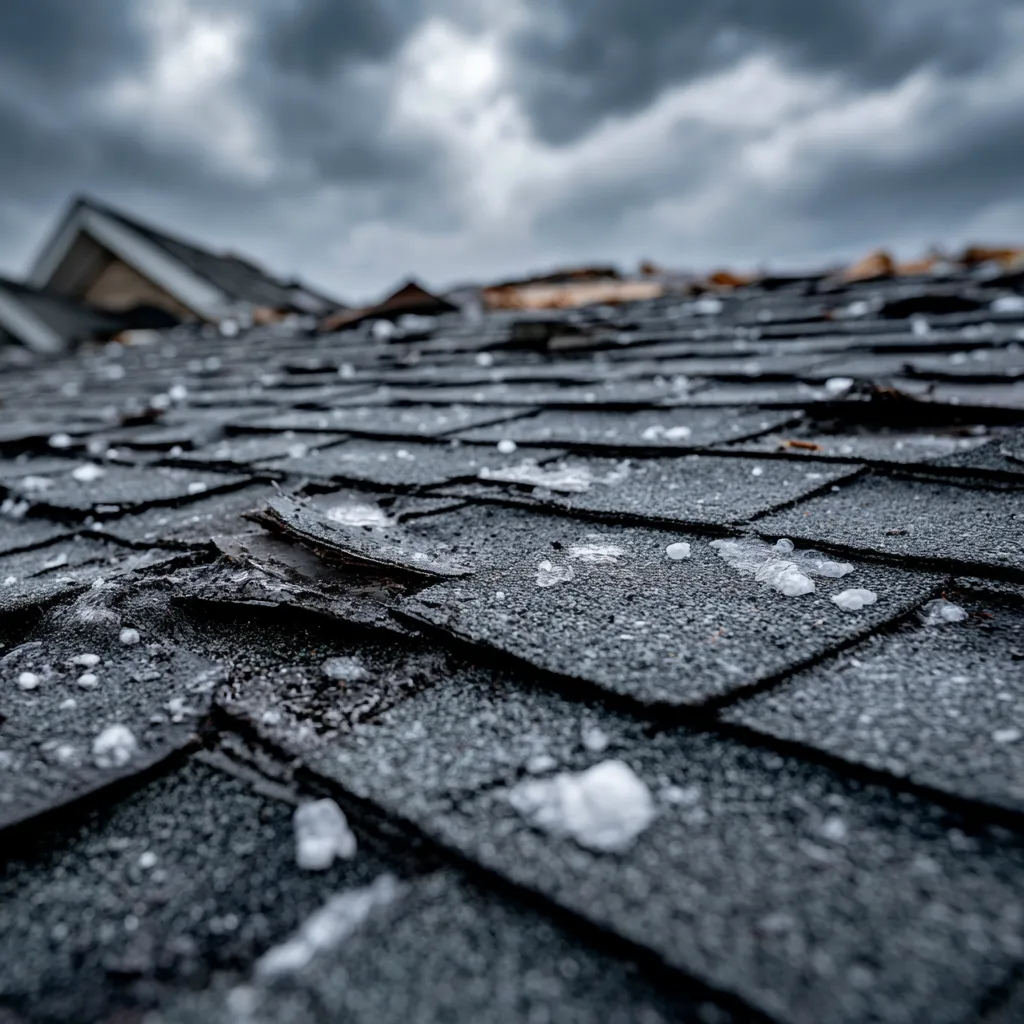
Hail Damage Roof Repair in Carrollton, TX
Dallas County has taken 96 hail reports in four years, and the damage that matters is the kind you cannot see from the yard. The work here starts with a camera, not a contract.
Call (972) 428-2019
Evidence first, repairs second.
A hailstone does its damage quietly: it fractures the shingle mat and knocks the protective granules loose without leaving a hole. From the ground the roof looks fine; a season or two later the fractures open into leaks.
So the first deliverable is documentation. A roofer covers the roof section by section, marks each strike, and hands you the image set. From there the path might be an insurance claim, a targeted repair, or a note to recheck next season; the claims guide explains the first option, and the county record shows why this keeps happening.
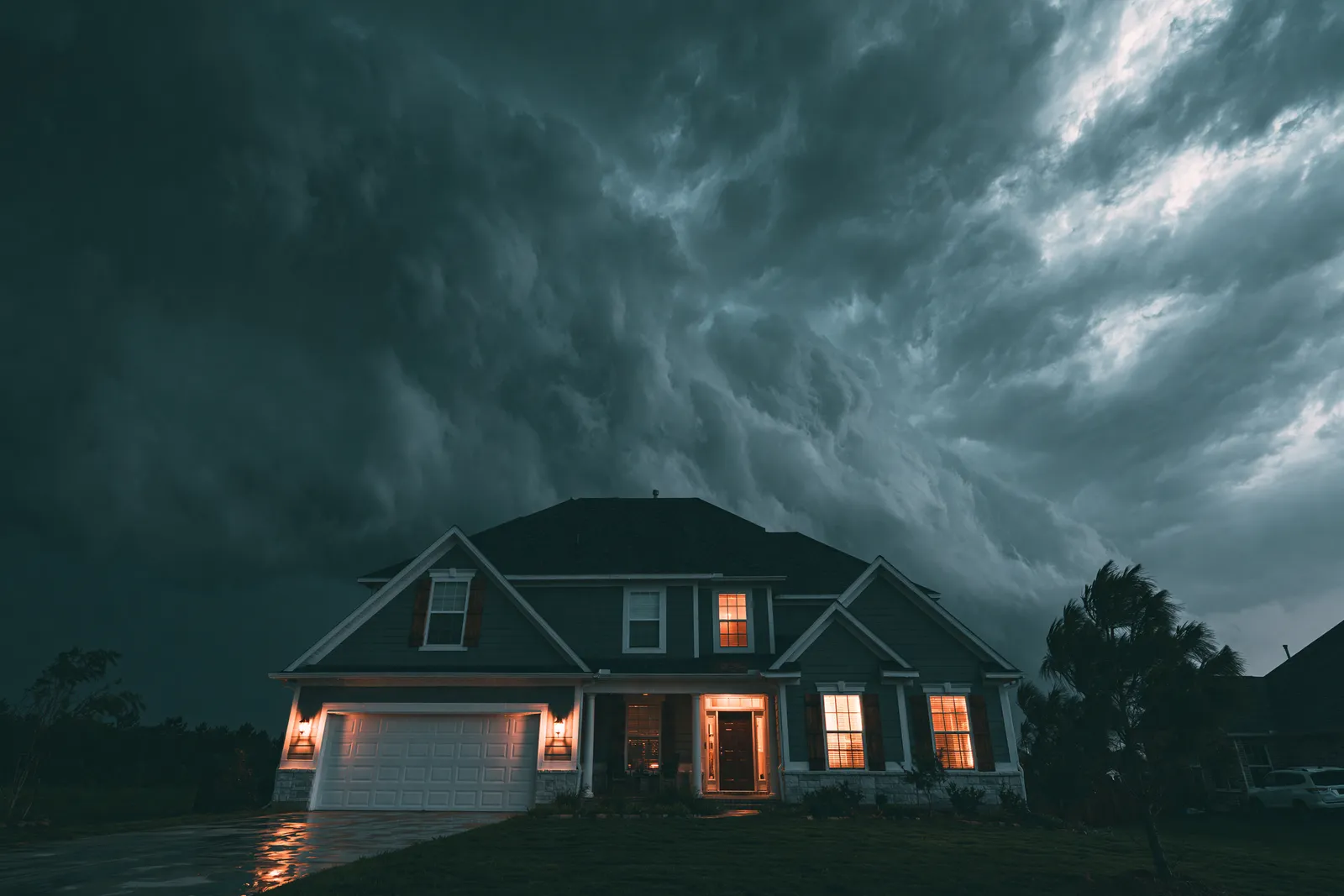
What hail leaves on a Carrollton roof.
The marks a roofer photographs, and the few you can spot yourself.
- Dark, soft-centered bruises in the shingle mat where stones landed
- Granules collecting in gutters and at downspout outlets after a storm
- Dings in soft metal: vents, flashing, gutters, the AC fins
- Creased or folded-back shingles from the wind that rode with the hail
- A neighbor street full of roofing signs after a loud night
Metal dings are the honest tell: if the storm marked the vents, it likely marked the shingles. A documented look settles it, and the photos are yours either way.
Hail and storm questions.
What Carrollton homeowners ask after the sky throws ice.
Q1The hail was months ago. Is an inspection still worth it?
Q2What does hail damage look like from the ground?
Q3Will filing a claim raise my rates?
Q4Can hail damage be repaired without replacing the whole roof?
Get the storm documented.
Fresh evidence photographs best. A local roofer marks and shoots every strike, and you decide what happens next with the record in hand and no clock running.
Or call (972) 428-2019